Howard Bolter
Author | Media Executive
It all started with a zoom call at XE5 Media a company of two, Mark Sonnenberg and myself. In 2012 we had a very preliminary conversation with Mo Abudu about consulting on her channel launch, but she was looking for a person to move to Nigeria and be in charge on site full time.
In January 2013 Mo called back and said she had to launch by July 1st 2013 to meet her distribution agreement, and she had made no significant progress in the last year with the team she had. Her questions were “can you get me up” and “how soon can you here.”
On February 13th, 2013 I touched down in Lagos, for the beginning of one of the most challenging launches I had yet to work on. The first day we went through the contract to make sure we would meet the deliverables. The first thing that stood out was the requirement of 750 hours of original programming per year. I assumed that would include reruns of original content, but we called to confirm those numbers and were told that number was for original hours not including repeats.
So that became task one to solve as the current shows in development were espisodic reality shows of 13 half hours. I then flew to Calabar, Nigeria the location of the studio to review the master control technology and the studios.
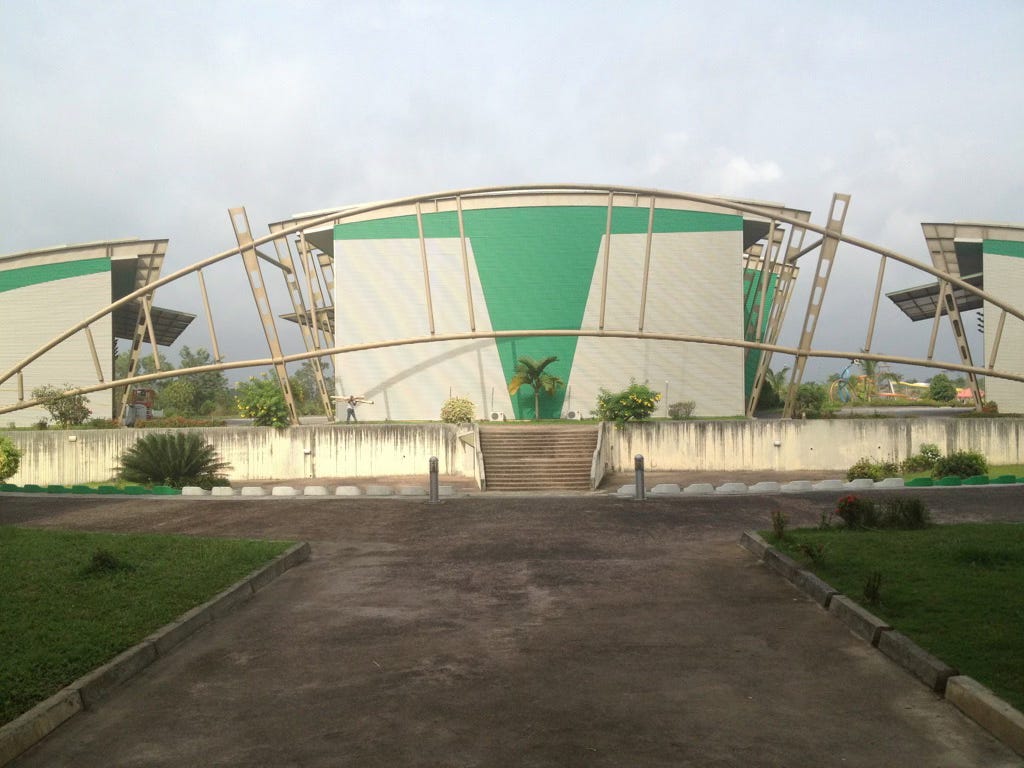
Upon review of the master control technology, I discovered that system sold to her was not a broadcast system but a playlist system like those used on music video channel. Also, the people had been installing it for over 2 months and it still didn’t work.
I made three recommendations right off the bat. We need to come up with hour long strip talk based programming to get us the hours, we need to replace the master control with broadcast ready playout systems, and we need to add a traffic system for commercial planning and integration.
Thats when I learned that working in Nigeria is not as easy as I had expected. The internet was slow and unreliable, so we could not take advantage of new technologies that were cloud based. Only certain broadcast vendors were allowed to sell in Nigeria, which limied our options equpment options greatly, And their was only one employee with any experience in network operations on staff.Following a review of our options we ordered the Playbox Systems M/C and its partnered traffic system. The only one we could get delviered quickly and willing to provide on-site training.
The good news was that the satellite dish for uplinking was on its way and would arrive ready for installation with a month. Globecast South Africa was providing the equipment and services to get the signal to DStv.
To assure Mo we would make it, I made sure that worst case we could deliver a hard drive of files to their Ops center in South Africa and they could put up the signal
without commercials to meet the deadline. This back-up had worked for me in the past at LATV when used Encompass in Atlanta to launch our network in Los Angeles. Rule number one always have a back up plan and that was mine.
So starting from scratch with Programming, Sandra Amadio and I began work on what the additional programming would be. There were 2 episodic shows already in production, one a sitcom prepped to shooting on one of the sound stages, so that was good for 6.5 hours. Second was a reality show also good for 6.5 hours, 13 hours down and only 737 hours to go.
We decided to put Moments with Mo back into production an hour long interview show, now had to be a strip, 48 weeks times 5 times a week would get us 240 hours. It could shoot 6 shows a weekend to account for holidays an breaks. Now we are down to 497 hours. We needed and another hour long strip show so we settled on the typical morning show talk format about current topics facing the Nigerian youth. Another 48 weeks times 5 another 240 hours and we’re down to 257 hours. We reviewed options and settled on a hosted entertainment 1/2 hour strip show for 52 weeks getting us another 130 hours and reducing our need to 127 hours. At this point we had a radio show on TV and a few other episodic reality shows in the pipeline that would fill out those last hours. So we had a plan. The production team would have to shoot two different shows each day and then reset to shoot and bank six shows each weekend. That was an extensive workload for an inexperienced crew but it was the only way to make the hours.
Finally we had to attack training, which was beyond “training” in most cases it was teaching the basics of everthing, broadcast operations and TV production from scractch. We leaned heavily on the few people with experience as we had to build out Ops teams and production teams and get them up and running asap.
Not to be overlooked was the marketing team, the creative was covered by Stefan le Roux out of South Afric, he had to replace the work that had been commisioned by the previous team and then build out an on-air promotions dept to feed the network. We were lucky that a lot of the promo work could be outsourced, but the actual brand identity package had to be installed on the master control system. That system becam operable two weeks before launch, so between training session there was a lot of testing as well.
Implementation took everyone up to the very last minute. But we launched without incident on June 30th 2013.
Here are my personal memories of the launch:
Having previously worked across the U.S., Canada, London, Paris, and Amsterdam, I found Nigeria to be a unique and challenging environment, especially as an American. Upon arrival in Lagos, I was advised to remain at the hotel for safety unless accompanied by someone from the team. Dining at the hotel was acceptable for Westerners, but we were cautioned only to eat at establishments catering to non-Nigerians. Casual outings to connect with staff—like stepping out for coffee—weren’t an option. Once I relocated to Calabar for studio work, I had more freedom to move around, though options were still limited. Meals in Calabar were prepared by a steward to ensure food safety, and only one local restaurant was approved for dining out. This was a stark contrast to other launches, where long hours and working lunches or dinners were common. The in ability to use social situations to work through issues made the process more difficult.
Each trip from Los Angeles to the network took two days: one day to reach Lagos, an overnight stay, then a flight to Calabar. The return journey was even more grueling—Calabar to Lagos, a 7-hour layover stashed away in a coffee shop waiting for the check-in to open, then a 14-hour flight to Houston, followed by a 3-hour layover before the final 3.5-hour leg to Los Angeles, totaling around 27.5 hours of continuous travel. I made this journey six times as we were launching two other channels at the same time.
Several factors complicated the process further. Internet access was slow and unreliable, restricting our ability to use cloud-based tools. At times, cell service was unavailable, making team communication challenging. There were even days when the studio complex had no running water. That ment no working bathrooms.
We encountered persistent technical issues as well. Equipment frequently overheated, and after extensive troubleshooting, we found that the local power supply was delivering 130 volts instead of the standard 120, with an inconsistent frequency. This power was sourced from a local power company generator. Once we addressed this issue, stability improved, but we ultimately installed a backup generator with a transfer switch after the power provider threatened to cut electricity on launch day unless we paid an additional fee. They did indeed cut power on launch night, and the network operated on backup power for first eight hours before the main power supply was restored.
During my initial visit to the studio, everything appeared ready—until the lighting director informed me that electrical circuits had been installed six feet short of the power source, leaving the lights unusable. It took a few weeks to resolve this issue.
The production control room also needed attention. The technical director could switch cameras but lacked experience with effects and other switcher functions. While the studio output was supposed to support recording all ISOs and the line cut (clean and dirty), only two record decks were purchased severly limiting our editing options
Training was also challenging. A large portion of the staff had limited familiarity with broadcast systems and protocols. We weren’t just teaching specific tasks; we were introducing fundamental broadcasting concepts. In production, this included show formats, music cue sheets, call sheets, and production schedules. For master control, training covered quality control, timing, scheduling, monitoring, as-run logs, and overall operations. We ended up with only a two-week training window before launch, as it took the full 3.5 months to get the new master control system delivered, installed, commissioned, and integrated with the uplink. Special thanks to Gabriel Onoja, our head of operations, who kept everything on track. The problem I had training people came down to the fact I spoke to fast and made everyone nervous (according to Gabriel). He told me he would wait until I left and then repeat what I said slower.
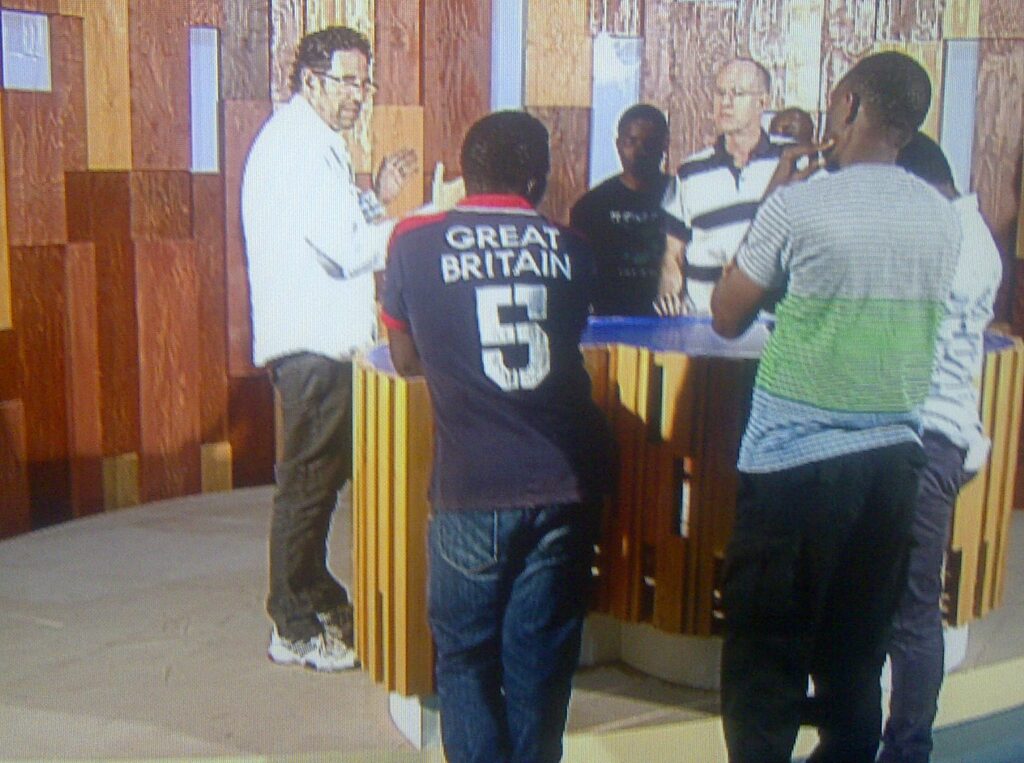
On the production side, we faced typical show issues. The sets posed shooting challenges as they were built for single camera film and not multicamera video. The talent was new, and rehearsal time was limited, especially for new strip shows. On the second stage, the scripted show progressed well but encountered scheduling conflicts due to sound bleed between stages, so both studios could not shoot at the same time.
One memorable issue was a 30-minute countdown clock I requested be built for the satellite feed day of launch. The clock file when played back displayed “30 minutes” at the end unfortunalty it reached 30 min on screen in 23 minutes, a simple conversion issue that took two days to resolve.
The production team had to work under a rigorous schedule, filming two different shows each day and banking six shows each weekend. The shows had to be topical so they couldn’t get ahead, they had to start actual production the week of launch. This demanding workload was essential to meet content requirements.
After months of intense preparation, EbonyLife TV successfully launched on June 30th, 2013, without a hitch. The entire experience was challenging and successful thanks to the resilience and dedication of everyone involved.